Source
-
Tiktokenizer 非常有用 online tokenizer!!
-
https://juejin.cn/post/7234795667477561402
-
https://zhuanlan.zhihu.com/p/424631681
-
https://zhuanlan.zhihu.com/p/654745411
-
Excellent YouTube video from Karpathy: https://www.youtube.com/watch?v=zduSFxRajkE&t=505s
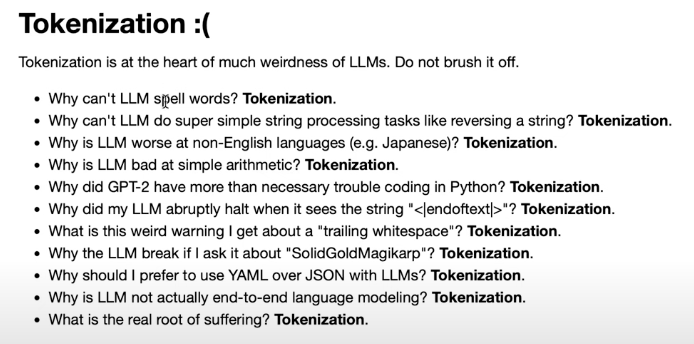
開場
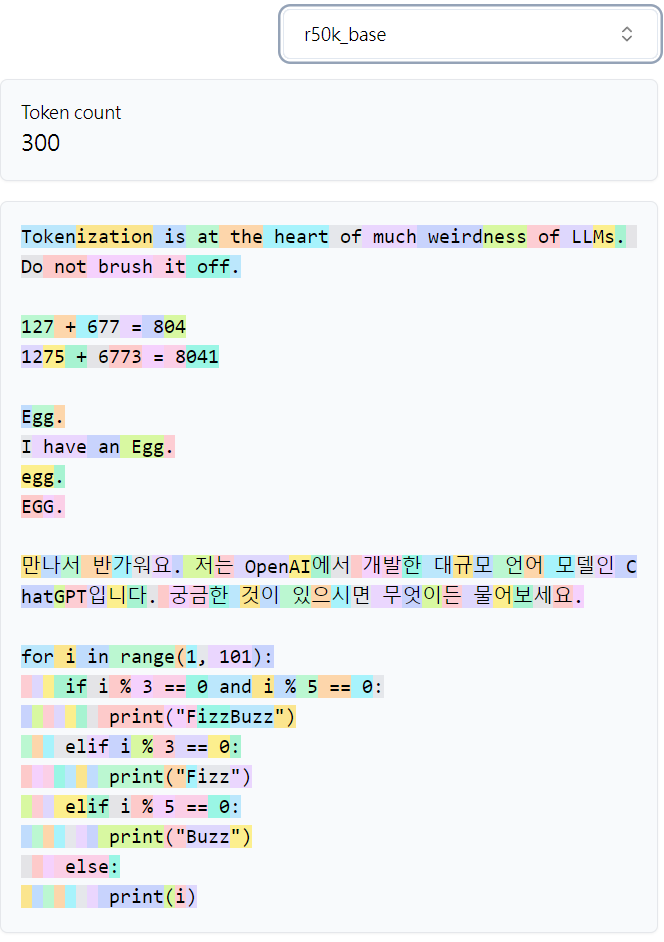
GPT2 tokenizer (GPT2=r50K_base) sucks!!!!
- 效率不好 (以下文字要 300 tokens)
- 數字完全隨意
- 空白隨意分,python un-friendly
- 非英語系基本是一字一 token
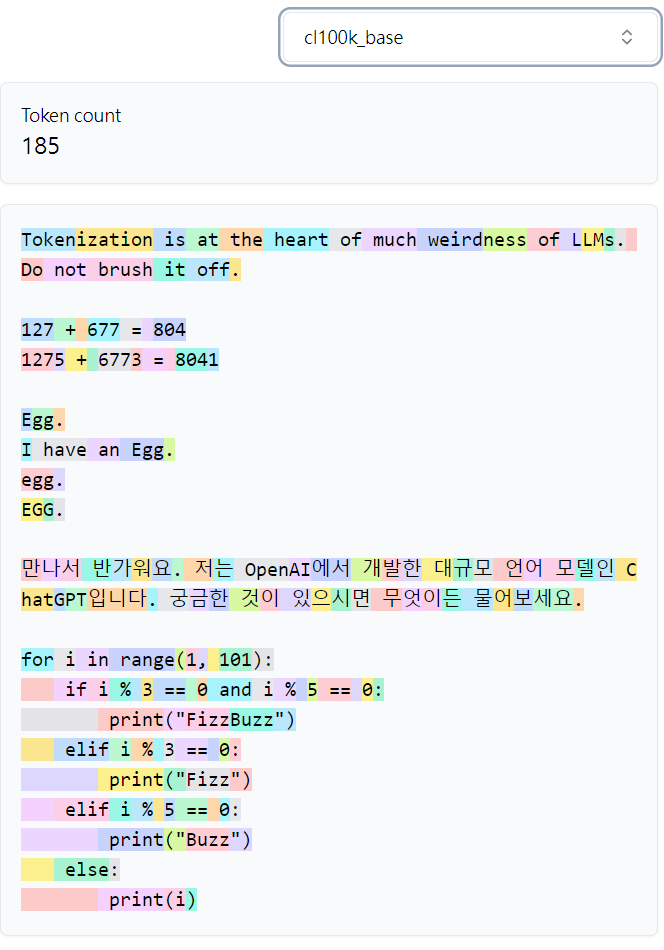
GPT4 tokenizer (C100K_base)
- 40%-50% more efficient than GPT2 tokenizer (185 vs. 300) becasuse 100K vs. 50K vocab.
- 3 個數字一組,并非 random.
- 空白合為一個 token, python friendly
還有一個系列 (p50k_base)

-
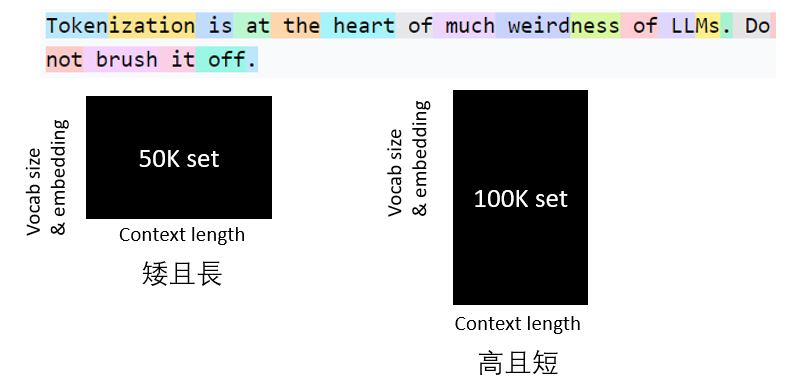
Larger token number (2x, 100K vs. 50K) trade-off
- 資訊被 2x 壓縮,原來的 context length 變一半。等效可以看到 2x longer input context.
- 但是, vocab size 和 embedding table 也變成 2x, bigger softmax operation
Unicode
Unicode sequence in python is:
1 | |
此處尚未 encode 成 bytes.
1 | |
UTF-8/UTF-16/UTF-32 Encode (UTF - Unicode Transformation Format)
Summary:
UTF-8 encode is preferred
- backward compatible to ASCII
- 如果是 English 語系,encode 比較 compact
- 缺點就是 variable length.
UTF-16 在 English 會多了一個 0.
UTF-32 在 English 會多了三個 0. 好處是 fixed length.
1 | |
BPE (Byte-Pair Encode, 也就是 tokenizer)
GPT2: reference: Language Models are Unsupervised Multitask Learners
初识BPE (from Karpathy Let’s build the GPT Tokenizer)
BPE 是一种简单的数据压缩算法,它在 1994 年发表的文章“A New Algorithm for Data Compression”中被首次提出。下面的示例将解释 BPE。老规矩,我们先用一句话概括它的核心思想:
BPE每一步都将最常见的一对*相邻数据单位*替换为该数据中没有出现过的一个*新单位*,反复迭代直到满足停止条件。
是不是听起来懂了却感觉没有完全懂?下面举个例子。
假设我们有需要编码(压缩)的数据 aaabdaaabac。相邻字节对(相邻数据单位在BPE中看作相邻字节对) aa 最常出现,因此我们将用一个新字节 Z 替换它。我们现在有了 ZabdZabac,其中 Z = aa。下一个常见的字节对是 ab,让我们用 Y 替换它。我们现在有 ZYdZYac,其中 Z = aa ,Y = ab。剩下的唯一字节对是 ac,它只有一个,所以我们不对它进行编码。我们可以递归地使用字节对编码将 ZY 编码为 X。我们的数据现在已转换为 XdXac,其中 X = ZY,Y = ab,Z = aa。它不能被进一步压缩,因为没有出现多次的字节对。那如何把压缩的编码复原呢?反向执行以上过程就行了。
Toy example summary
開始 aaabdaaabac: 4 vocabulary or token size {a:0, b:1, c:2, d:3}, 11 token length
最終 XdXac: 7 vocabulary or token size {a:0, b:1, c:2, d:3, X=ZY:4, Y=ab:5, Z=aa:6}, 5 token length
一般例子 BPE “Training”
用 Karpathy 的例一 (token = 533, vocab_size~336, entropy 6.6bit):
這個字串包含 533 字符。經過 UTF-8 encode 之後變成 616 byte sequence。增加來自 non-English 字符。
Unicode! 🅤🅝🅘🅒🅞🅓🅔‽ 🇺🇳🇮🇨🇴🇩🇪! 😄 The very name strikes fear and awe into the hearts of programmers worldwide. We all know we ought to “support Unicode” in our software (whatever that means—like using wchar_t for all the strings, right?). But Unicode can be abstruse, and diving into the thousand-page Unicode Standard plus its dozens of supplementary annexes, reports, and notes can be more than a little intimidating. I don’t blame programmers for still finding the whole thing mysterious, even 30 years after Unicode’s inception.
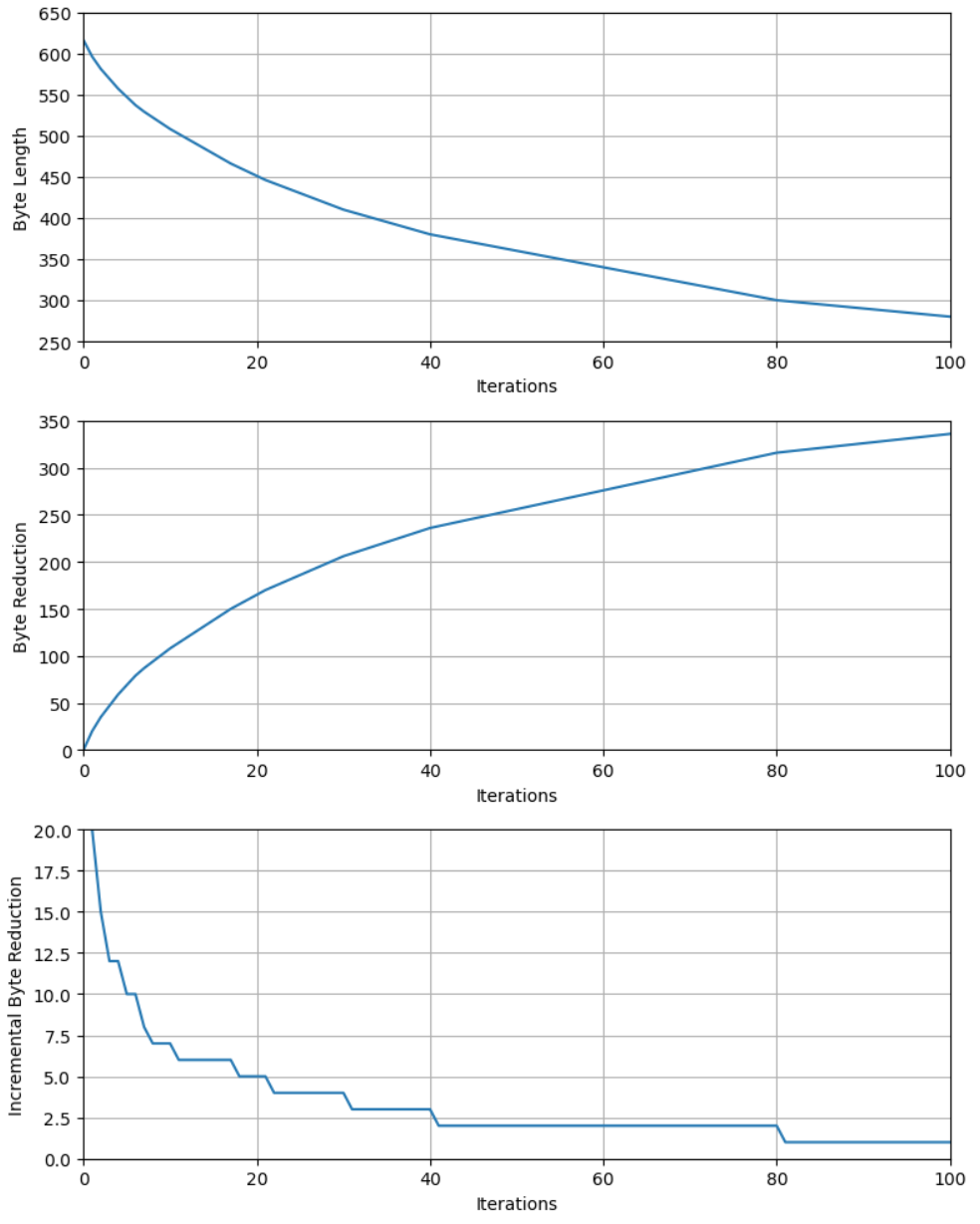
當我們逐步使用 BPE 可以降低 byte length, 如下圖上。如果想看減少多少 byte, 如下圖中;會是一個遞減的收益函數。最後是 incremental byte reduction. 基本從 80 iterations 之後都是增加一個 vocab (token) size 換一個 token length reduction, 沒有任何的 gain!! 反而增加 encode 和 decode 的計算量!! 我們用 entropy 更清楚。
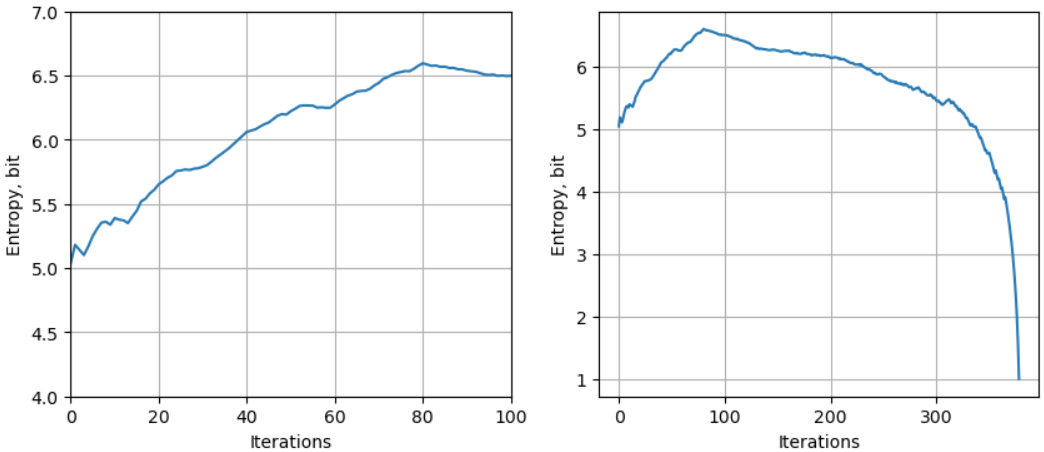
下圖是 self entropy 對 iteration (就是額外的字符) 的趨勢:
- 原始 token distribution (iteration = 0) 的 entropy 最小 (5-bits): 直觀上只有字符出現的頻率 information. 理論上 1-byte uniform distribution 的 entropy 是 8-bit, 不過因爲非 uniform distribution, UTF-8 大約是 5-bit.
- 隨著 iteration 增加,total entropy = 原來字符 information (下降) + 新的 sequence (order) information (上升), 所以 total entropy 增加!
- 原來字符 information 和文章長短關係不大,只要 token 數目遠大於 1-byte (256 tokens), 大約就是 5-bit.
-
等到新的 sequence information 消失 (就是 iteration=80, Incremental byte reduction = 1), 增加 iteration 沒有任何意義,pair 反而減少 token 數目,entropy 開始下降,最後到 1-bit.
- Entropy 的 peak 值大約是 6.6bit. 在 increamental byte reduction = 1 之後會掉下去。Vocab size = 256+80 ~ 336.
開始 256 (1-byte) vocabulary byte sequence -> 形成 byte-pair (這也是 BPE 的來源),遞回次數決定多少新的 vocabulary
256, 257, ….. 由 training code book: {0x0:0, 0x1:1, 0x2:2, 0x3:3, ….0xff: 255, ‘0x1 0x9’: 256, ‘0x70 0x9’: 257, ….}
-
vocab_size = 256 + iterations
-
下表可見 appendix
| Token Length | Vocab Size (256+peak entropy iteration) |
Initial Entropy | Peak Entropy | |
|---|---|---|---|---|
| Unicode article | 616 | 336 | 5 bit | 6.6 bit |
| Unicode article | 24.6K | 2.2K | 5 bit | 10.2 bit |
| Shakespeare | 1.1M | 20~50K | 4.8 bit | 13~14 bit |
Summary
- 上面都是 training 一個 dataset. 應該有 overfit 的問題。計算 entropy 應該要用不同的 dataset 驗證?
- Inference 包含 encode 和 decode 兩個部分。都是用查表?
BPE Encode and Decode
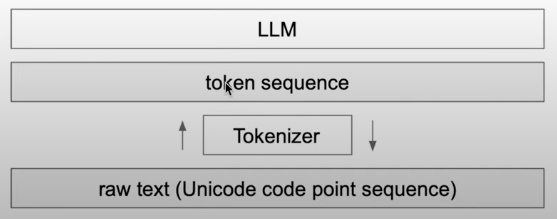
Tokenizer is independent of the LLM!! Can be tuned or trained separately, 但是用非常簡單的 algorithm + statistics, not ai algorithm!
Q: Chinese characters tokenizer counts?
Q: trans-tokenizer
Q: 統計各種 tokenzier 對於壓縮的對比,借此來做 transcoder. like bigram in Karpathy’s example.
Q: 使用 Viterbi 或是科學空間的方法來處理 tokenizer.
兩類 BPE
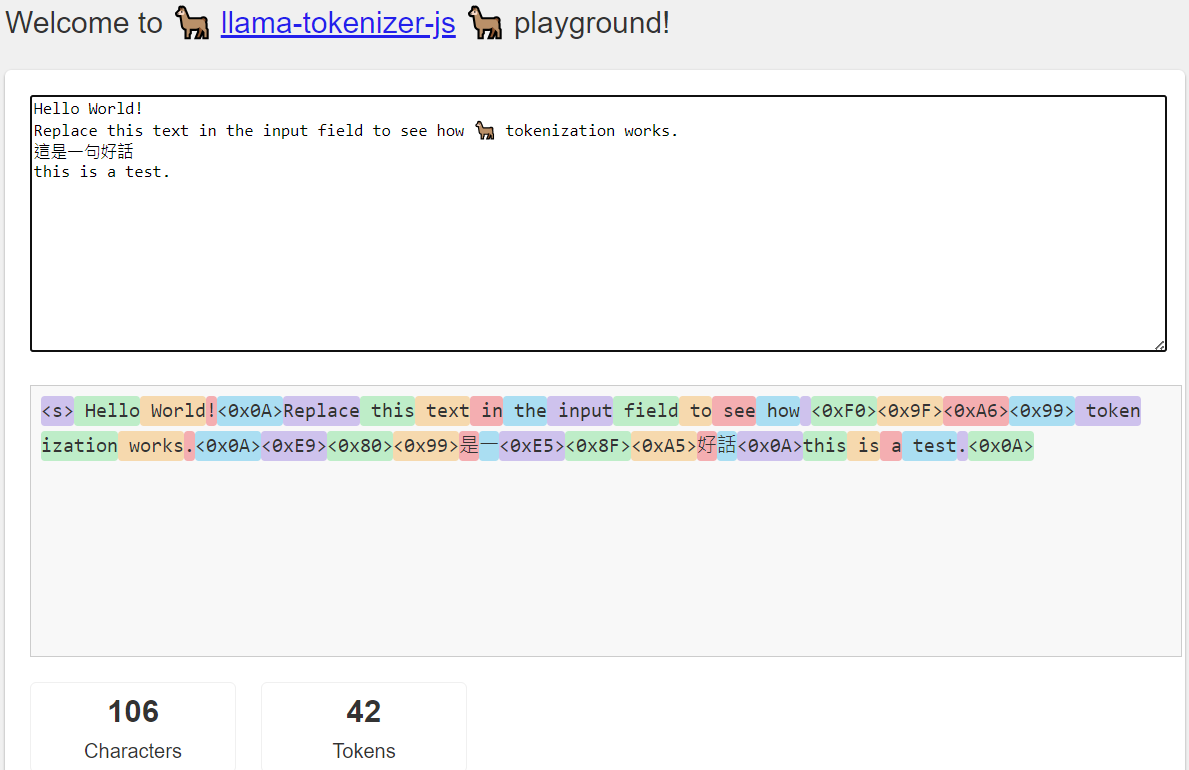
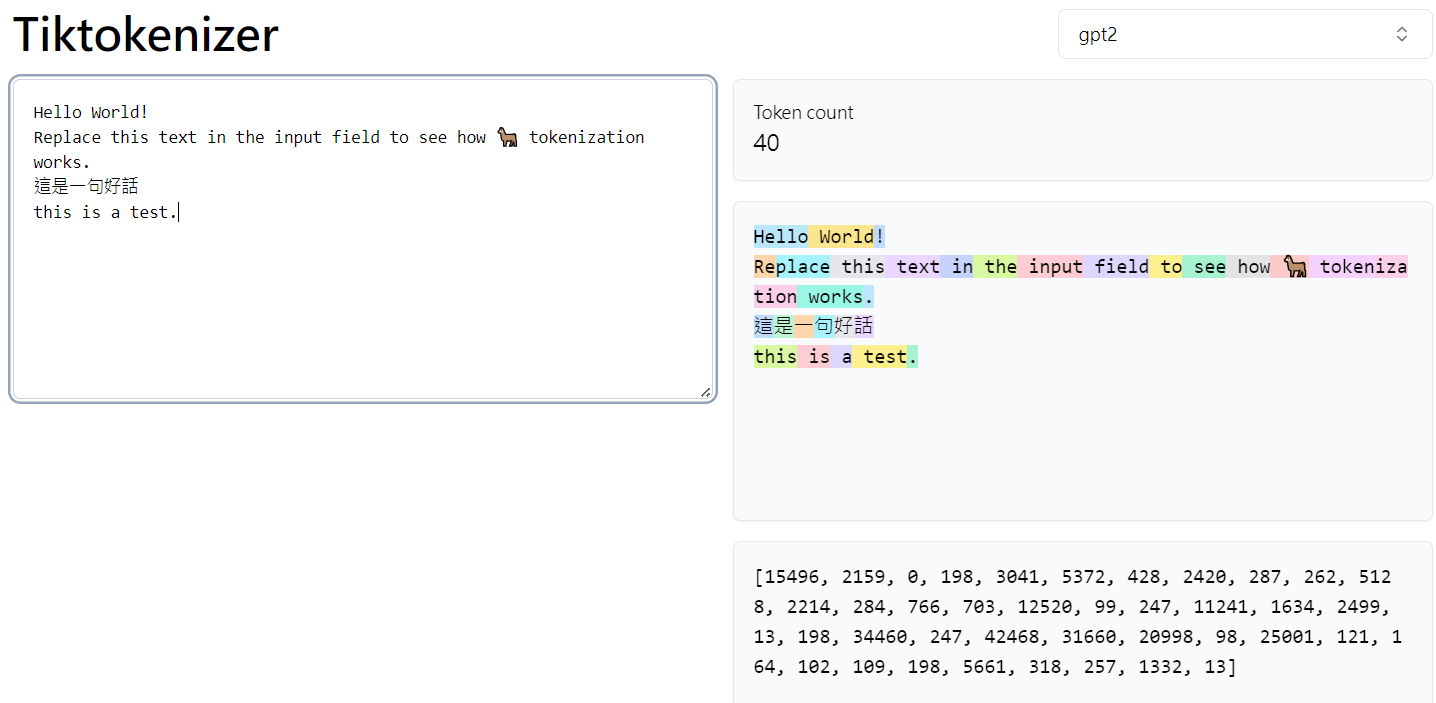
以上的 BPE 例子是 OpenAI 的 tiktoken. 還有另一個系列是 Google 和 Meta 使用的 sentencepiece tokenizer. 下圖是 llama 使用的 tokenzier.
- 最重要的特點是 character coverage 並不是 100%, 而是可以設定的值!
- 對於不直接 encode 的 character, 搭配 byte_fallback, 會改成 utf-8 bytes 如下圖。
- “這是一句好話”:“這” “句” 都 fall back 成 byte 表示。
- 自動加 space token (在 Hello 之前) 以及其他 extra tokens (e.g.
<s>). 稱爲 normalization.
| GPT-like | Llama-like | |
|---|---|---|
| Use case | GPT2/4, minbpe | Llama series, Mistral series |
| Pip | tiktoken | sentencepiece |
| Vocab_size | 50257 (GPT2), 100257 (GPT4) | 32000 (Llama), ~250K (Gemma) |
| Training/Inference tokenizer 這裡指 tokenizer, 和 LLM 無關 |
不同 (OpenAI 只 disclose inference tokenizer) | 相同 (可以 training 自己 tokenizer) |
| Normalization (改動 token) | No | Yes |
| Legacy | 很少,code is clean | 很多,code is messy |
| Training 過程 | Text -> utf8 code (1-4 byte number) -> BPE bytes | Text -> BPE raw byte -> fall back to utf-8 byte |
- tiktoken encodes to utf-8 and then BPEs bytes
- sentencepiece BPEs the code points and optionally falls back to utf-8 bytes for rare code points (rarity is determined by character_coverage hyperparameter), which then get translated to byte tokens.
不是很確定兩者的差別?似乎在 GPT-like tokenizer 在對 English / non-English 的差異比較小。但在 Llama tokenizer 對 English / non-English 差異很大? 所以 GPT 對中日韓文比較好?
Appendix
用 Karpathy 的例一 (token = 533, vocab_size~336, entropy 6.6bit):
這個字串包含 533 字符。經過 UTF-8 encode 之後變成 616 byte sequence。增加來自 non-English 字符。
Unicode! 🅤🅝🅘🅒🅞🅓🅔‽ 🇺🇳🇮🇨🇴🇩🇪! 😄 The very name strikes fear and awe into the hearts of programmers worldwide. We all know we ought to “support Unicode” in our software (whatever that means—like using wchar_t for all the strings, right?). But Unicode can be abstruse, and diving into the thousand-page Unicode Standard plus its dozens of supplementary annexes, reports, and notes can be more than a little intimidating. I don’t blame programmers for still finding the whole thing mysterious, even 30 years after Unicode’s inception.
當我們逐步使用 BPE 可以降低 byte length, 如下圖上。如果想看減少多少 byte, 如下圖中;會是一個遞減的收益函數。最後是 incremental byte reduction. 基本從 80 iterations 之後都是增加一個 vocab (token) size 換一個 token length reduction, 沒有任何的 gain!! 反而增加 encode 和 decode 的計算量!!
Entropy 的 peak 值大約是 6.6bit. 在 increamental byte reduction = 1 之後會掉下去。Vocab size = 256+80 ~ 336.
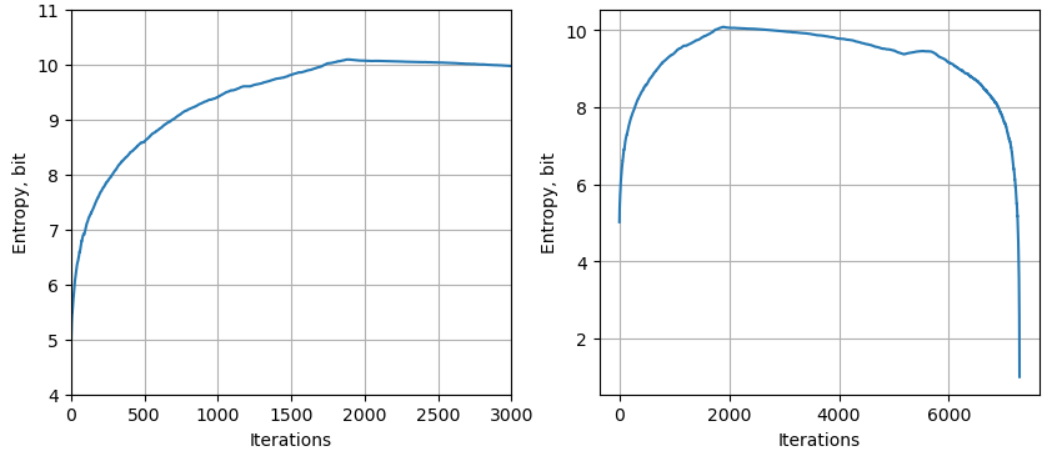
用 Karpathy 的例二 (token = 24.6K, vocab_size~2.2K, entropy~10.2bit):
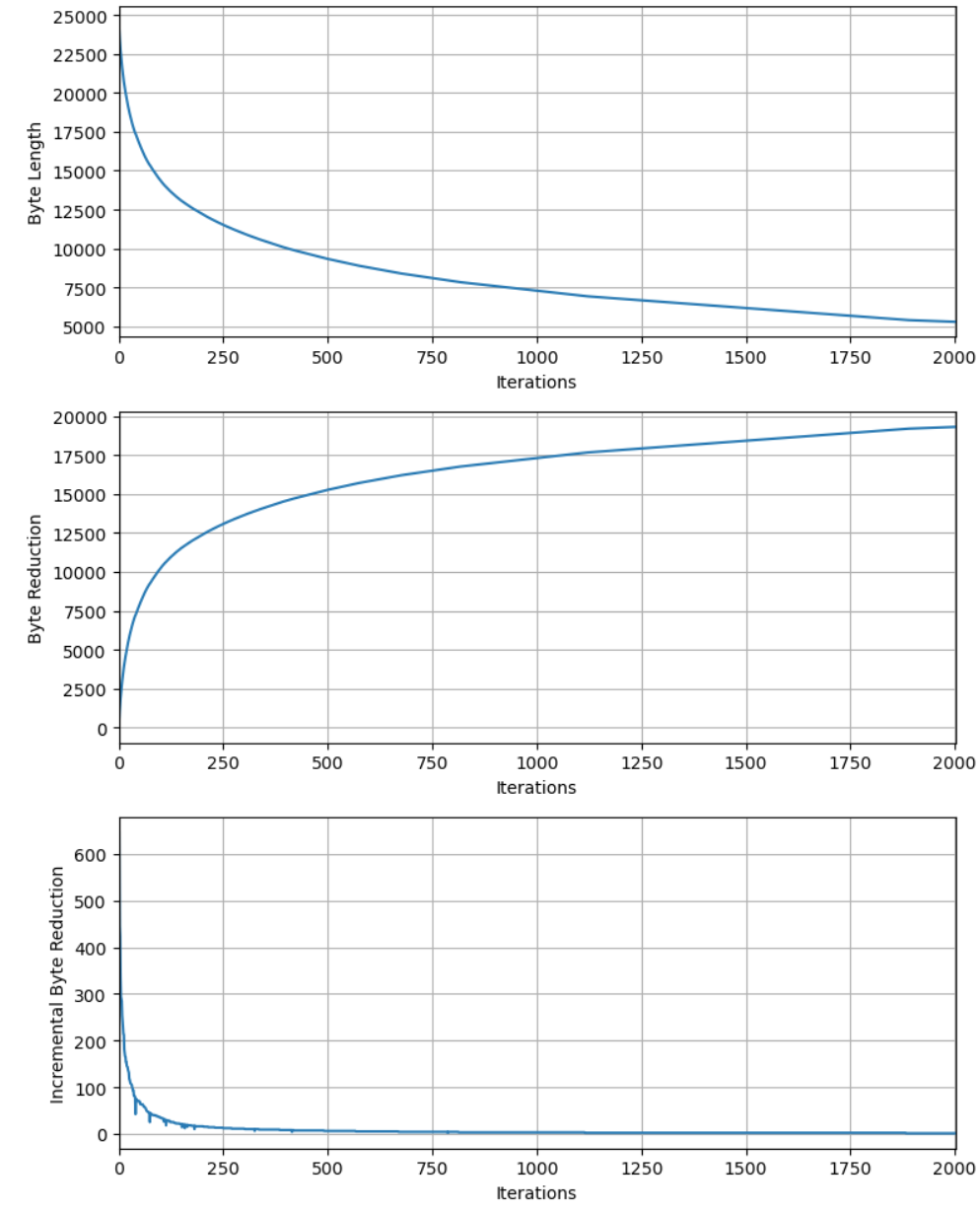
再試上文的全文,約 24597 bytes (UTF-8)。經過 2000 iterations: 最大 entropy 約在10.2 bits@1900 iteration. Vocab size ~ 1900+256=2156.
用 Karpathy 的例三 (token = 1.1M, vocab_size > 1K, entropy > 10.2bit):
莎士比亞的文章,一共有 1,115,393 字母。前 100 個字母 (含空白)如下:
2
3
4
5
6
7
8First Citizen: Before we proceed any further, hear me speak. All: Speak, speak. First Citizen: You
經過 UTF-8 encode 之後的 byte number 仍然是 1,115,393. 我們依樣畫葫蘆,可以得到以下的圖。
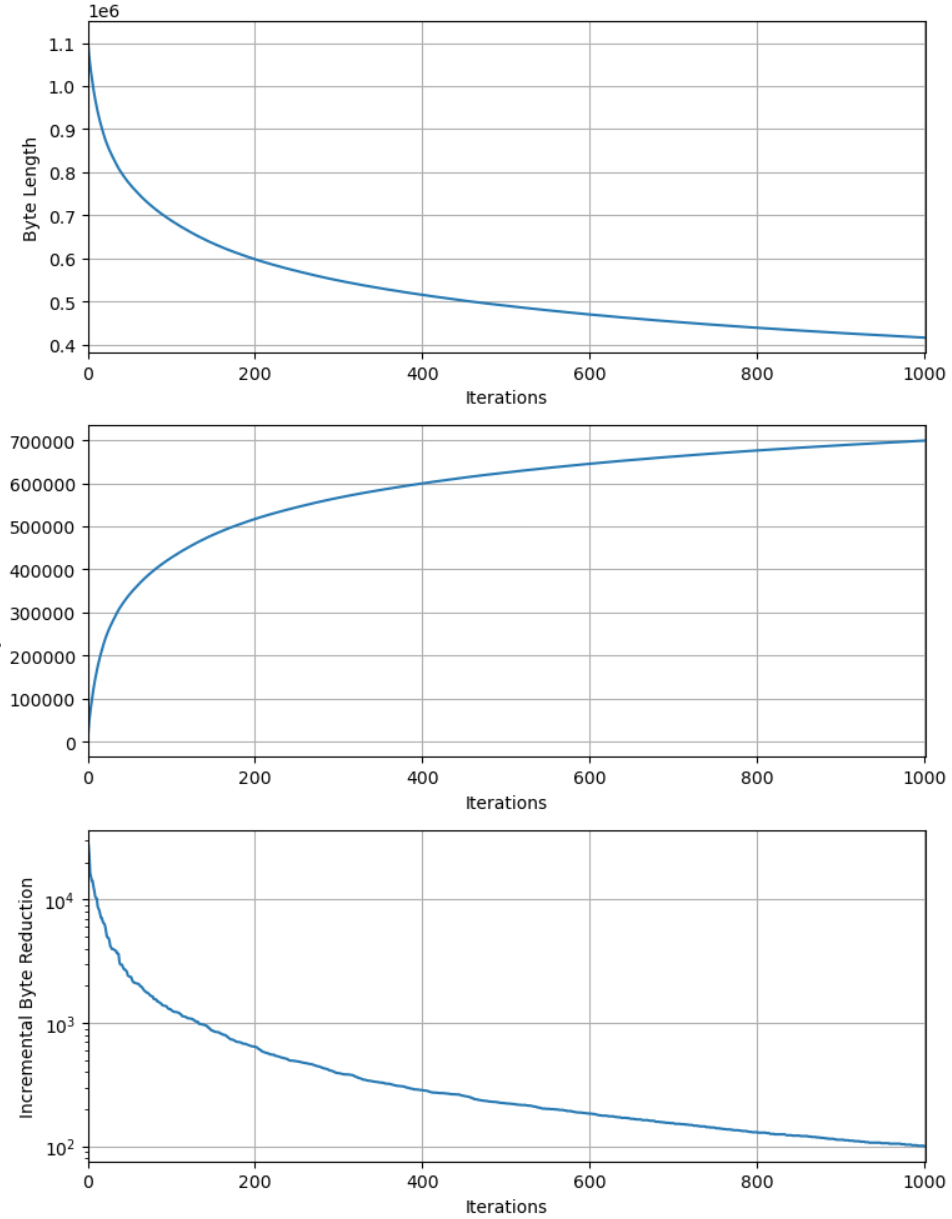
Entropy > 13 bits.
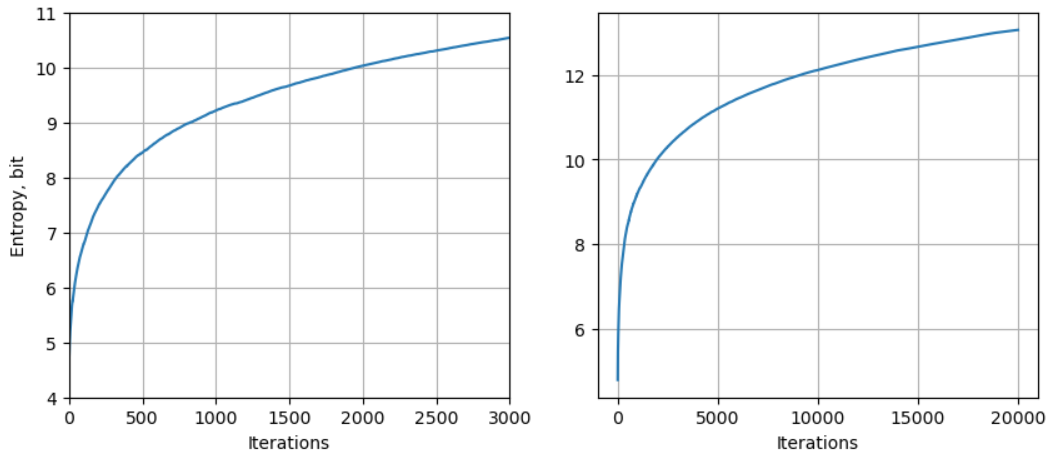
- 使用 normalization 改成 percentage or entropy 看是否有物理意義 English, Chinese, ….
Tokenizer
- character level encoder: codebook 65
- BPE (byte-pair encoder)
- GPT2-3: codebook 50541?
- Tiktoken (OpenAI)
基本是 trade-off of the codebook vs. the token length!
@guodongLLMTokenizer2023
背景
隨着ChatGPT迅速出圈,最近幾個月開源的大模型也是遍地開花。目前,開源的大語言模型主要有三大類:ChatGLM衍生的大模型(wenda、ChatSQL等)、LLaMA衍生的大模型(Alpaca、Vicuna、BELLE、Phoenix、Chimera等)、Bloom衍生的大模型(Bloomz、BELLE、Phoenix等)。其中,ChatGLM-6B主要以中英雙語進行訓練,LLaMA主要以英語爲主要語言的拉丁語系進行訓練,而Bloom使用了46種自然語言、13種編程語言進行訓練。
| 模型 | 訓練數據量 | 模型參數 | 訓練數據範圍 | 詞表大小 | 分詞算法 |
|---|---|---|---|---|---|
| LLaMA | 1T~1.4T tokens(其中,7B/13B使用1T,33B/65B使用1.4T) | 7B~65B | 以英語爲主要語言的拉丁語系 | 32K | BBPE |
| ChatGLM-6B | 約 1T tokens | 6B | 中英雙語 | 130K | BBPE |
| Bloom | 1.6TB預處理文本,轉換爲 350B 唯一 tokens | 300M~176B | 46種自然語言,13種編程語言 | 250K | BBPE |
| GPT2 | ? | 50K | Tiktoken |
目前來看,在開源大模型中,LLaMA無疑是其中最閃亮的星。但是,與ChatGLM-6B和Bloom原生支持中文不同。LLaMA 原生僅支持 Latin 或 Cyrillic 語系,對於中文支持不是特別理想。原版LLaMA模型的詞表大小是32K,而多語言模型(如:XLM-R、Bloom)的詞表大小約爲250K。以中文爲例,LLaMA詞表中的中文token比較少(只有幾百個)。這將導致了兩個問題:
- LLaMA 原生tokenizer詞表中僅包含少量中文字符,在對中文字進行tokenzation時,一箇中文漢字往往被切分成多個token(2-3個Token才能組合成一個漢字),顯著降低編解碼的效率。
- 預訓練中沒有出現過或者出現得很少的語言學習得不充分。
爲了解決這些問題,我們可能就需要進行中文詞表擴展。比如:在中文語料庫上訓練一箇中文tokenizer模型,然後將中文 tokenizer 與 LLaMA 原生的 tokenizer 進行合併,通過組合它們的詞彙表,最終獲得一個合併後的 tokenizer 模型。
本文將介紹使用SentencePiece工具如何使用中文語料訓練一個分詞模型。
Coding 例子
1 | |
如何得到 tokenizer? 當然也是 pretrain 得來的。不過一般我們只引用固定的 tokenizer.
答案是肯定的,Tokenizer也是在庞大的预训练语料上训练出来的,只不过由于计算需求相对训练模型少很多。
而在LLAMA中,作者使用的是SentencePiece得到最后的词典,Tokenizer的基座也是SentencePiece中的SentencePieceProcessor类, 如下图红框所示,LLAMA的encode过程实际上是通过SentencePiece实现的。